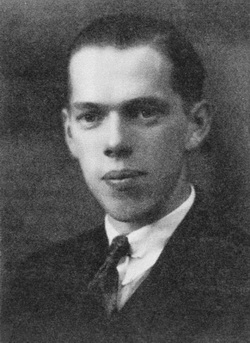
 Philip Hauge Abelson (born 27.04.1913) - American physicist and geochemist, member of the National Academy of Sciences (1959). Born in Tacoma. Graduated from college in Washington (1935). From 1939 onwards (apart from 1941-46, when he took part in the Manhattan Project) Abelson worked at the Carnegie Institute of Technology, including as director of its geophysical laboratory in 1953-71 and as president of the institute in 1971-78. In 1972-74 he was elected president of the American Geophysical Union.
Abelson's research concerned nuclear physics, nuclear chemistry, organic geochemistry, biophysics, microbiology and the problem of the origin of life. Together with E. McMillan he is regarded as a pioneer in the study of the transuranic elements. In 1940 they discovered the first such element, neptunium. The scientist's papers also discuss nuclear fission, the identification of the products of uranium fission and the separation of uranium isotopes. In particular, in 1940 he proposed the thermal diffusion method for separating uranium isotopes. His work on the biosynthesis of microorganisms and on amino acids in fossils and rocks is also worth noting.
The J. Priestley Medal (1973) and others.