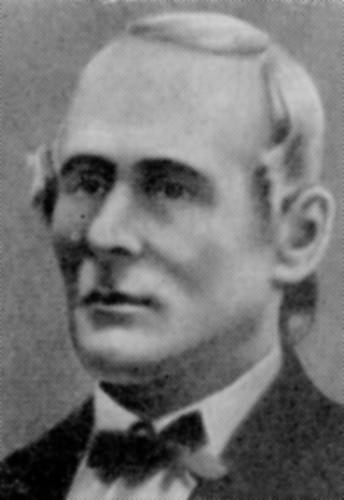
 Anders Jonas Ångström (13.08.1814 —21.06.1874) was a Swedish physicist and astronomer. Born in Lögdö. He graduated from the university in Uppsala (1839), where he worked (professor from 1858, and rector in 1870-71). His research in physics concerned spectral analysis. He was one of the founders of spectroscopy. He studied the spectra of flames, of the electric arc, of the Sun and of the planets. He measured the wavelengths of solar radiation with great accuracy and drew up in 1868 the first detailed atlas of the spectral lines of the solar spectrum. In 1862 he discovered hydrogen in the solar atmosphere. Ångström's work was also in the field of heat, magnetism and the study of metals. A unit of length equal to 10-8 cm is named after Ångström. A member of a number of scientific societies. The B. Rumford Medal (1872).
Ångström, Anders Jonas
Anders Jonas Ångström (13.08.1814 —21.06.1874) was a Swedish physicist and astronomer. Born in Lögdö. He graduated from the university in Uppsala (1839), where he worked (professor from 1858, and rector in 1870-71). His research in physics concerned spectral analysis. He was one of the founders of spectroscopy. He studied the spectra of flames, of the electric arc, of the Sun and of the planets. He measured the wavelengths of solar radiation with great accuracy and drew up in 1868 the first detailed atlas of the spectral lines of the solar spectrum. In 1862 he discovered hydrogen in the solar atmosphere. Ångström's work was also in the field of heat, magnetism and the study of metals. A unit of length equal to 10-8 cm is named after Ångström. A member of a number of scientific societies. The B. Rumford Medal (1872).