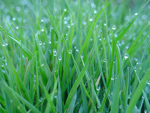
You have probably seen small drops of water on grass, plants and trees shining in the early hours of the morning. These drops of water are called dew. Quite often people think that dewdrops, like raindrops, fall to the ground from the sky during the night, but this is not so.
Dewdrops form as a result of the condensation of water vapour. The air around us contains water vapour. Hot air contains more moisture than cold air. During the night, when hot air comes into contact with a small cold surface, the water vapour present in it condenses on the cold surface in the form of drops. These tiny drops of water are called dewdrops.

The process of dew formation can be seen in a simple experiment. Take a glass and put it on a table. Now put ice in the glass or pour ice-cold water into it. You will notice that after some time small drops of water have appeared on the outer surface of the glass. These drops of water form as a result of the condensation of the water vapour present in the air. In exactly the same way, when trees, plants and grasses become cold at night, the water vapour from the air condenses on them in the form of dew.
More dew forms when the sky is clear and less in cloudy weather. When it is cloudy, trees and plants do not cool enough and, consequently, less condensate forms.