AIM OF THE EXPERIMENT: To see whether the shape of an object affects its strength.
MATERIALS: three sheets of paper, adhesive tape, books (weighing up to half a kilogram), a helper.
MATERIALS: three sheets of paper, adhesive tape, books (weighing up to half a kilogram), a helper.
Изображение
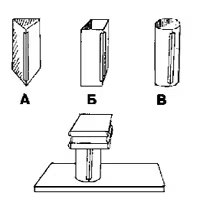
Fold the sheets of paper into three different shapes:Shape A — fold a sheet in three and glue the ends, Shape B — fold a sheet in four and glue the ends, Shape C — roll the paper into a cylinder and glue the ends.
Stand all the shapes you have made on the table.
With your helper, place the books on them at the same time, one by one, and see when the structures collapse.
Note how many books each shape can hold.
RESULTS: The cylinder holds the largest number of books.
WHY? Gravity (the pull towards the centre of the Earth) draws the books down, and the paper supports hold them up. If the Earth's pull is greater than the resisting force of the support, the weight of the books crushes it. The open paper cylinder proved the strongest of all the shapes, because the weight of the books resting on it was spread evenly over its walls.
METHOD: