Francis Halzen, the force behind the IceCube observatory, has won the prize: IceCube was the first to see high-energy neutrinos arriving from deep space.
Tens of billions of neutrinos pass through your body every second, and you notice nothing. Neutrinos hardly interact with matter: most of them cross the whole Earth without hitting anything. That is what makes them so hard to catch, and so valuable to astronomers. Light from a distant galaxy is absorbed and scattered on the way; neutrinos bring news straight from its interior.
On 6 October the Royal Swedish Academy of Sciences awarded the Nobel Prize in Physics to Francis Halzen of the University of Wisconsin–Madison, "for decisive contributions to the IceCube Neutrino Observatory and the discovery of high-energy neutrinos of astrophysical origin". Halzen was born in 1944 in Tienen, Belgium. He proposed the observatory in 1988 and has led it since 2001.
A detector a cubic kilometre in size
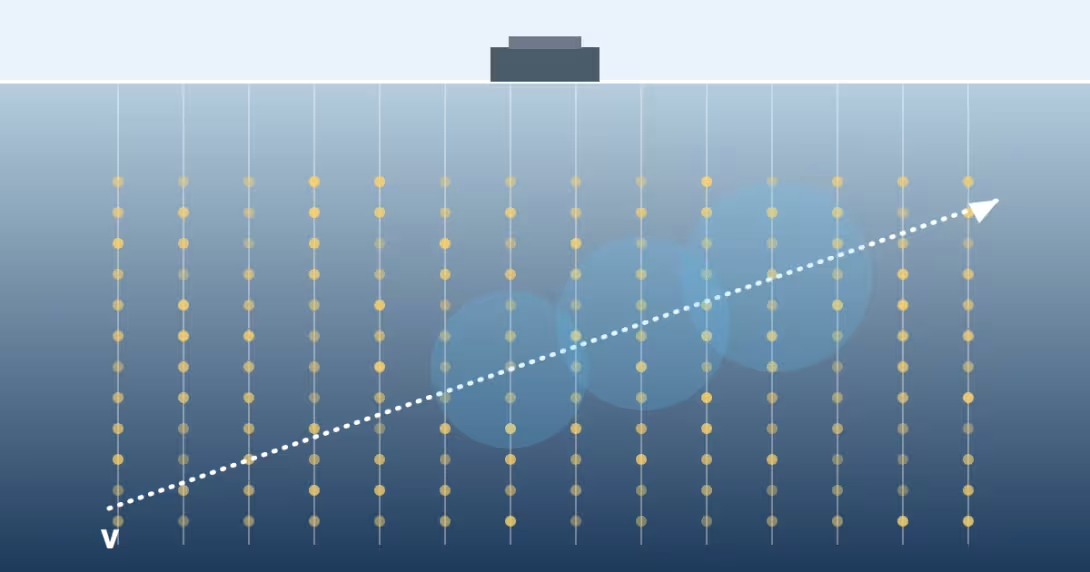
To catch even a few neutrinos you need an enormous amount of matter. IceCube works like this: 5,160 light sensors are frozen into the ice near the Amundsen–Scott station at the South Pole, down to two kilometres deep. When a neutrino does strike an atomic nucleus in the ice, it produces a charged particle. That particle travels faster than light travels in ice and gives off a faint blue flash, Cherenkov radiation. The sensors record it, and the order in which they fire shows where the neutrino came from.
Construction was finished in December 2010, and by 2013 the detector had recorded 28 neutrinos of energies that neither the Sun nor the Earth's atmosphere can produce: the first neutrinos known to have come from beyond our Galaxy.
There is more on particles and nuclei in the site's encyclopedia.