Andronov, Alexander Alexandrovich
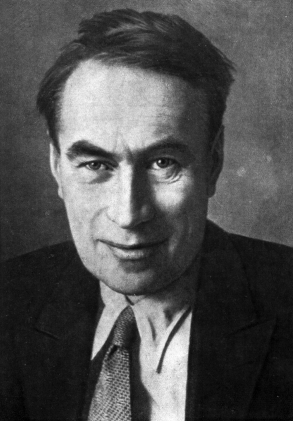 Alexander Alexandrovich Andronov
(11.IV 1901 - 31.X 1952) was a Soviet physicist and an academician (1946). He was born in Moscow. He graduated from Moscow University (1925), where in the following years he was a postgraduate student and then worked. From 1931 he was professor at Gorky University. His work was in the field of the theory of oscillations, the general dynamics of machines, the theory of differential equations, the theory of automatic control, radiophysics and the history of technology. He developed (1928) an effective mathematical apparatus for problems in the theory of nonlinear oscillations and laid the foundations of a rigorous theory of self-oscillations (he introduced the term “self-oscillations”, gave self-oscillations an exact mathematical definition and linked their theory with the qualitative theory of differential equations). It was thanks to his work that the study of self-oscillations became a coherent chapter of the theory of oscillations. He extended the idea of structurally stable systems (with L. S. Pontryagin) and proposed a new approach to differential equations. He obtained fundamental results in the theory of automatic control. Together with L. S. Pontryagin he studied the effect of fluctuations on non-conservative systems that have several stable states of equilibrium. He developed a powerful mathematical method for solving a wide class of nonlinear problems in three-dimensional and four-dimensional phase space: the method of transforming a surface into a surface (for three-dimensional phase space) and space into space (for four-dimensional). He was the first to give, without any linear idealisation, a picture of the dynamic behaviour of a number of self-regulating systems. He carried out important studies on the theory of clocks, on the linear theory of oscillations and on questions connected with it. He founded a scientific school. In 1969 the Presidium of the USSR Academy of Sciences established the A. A. Andronov Prize.