AIM OF THE EXPERIMENT: To compare the speed of sound in solids and in air.
MATERIALS: a plastic cup, a rubber band in the form of a ring.
MATERIALS: a plastic cup, a rubber band in the form of a ring.
Изображение
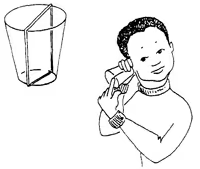
Put the rubber ring on the cup as shown in the picture.
Hold the cup to your ear, bottom first.
Twang the stretched band like a string.
RESULTS: A loud sound is heard.
WHY? An object sounds when it vibrates. As it vibrates it strikes the air, or another object if one is next to it. The vibrations begin to travel through the air that fills everything around, their energy acts on the ears, and we hear a sound. Vibrations travel much more slowly through air — a gas — than through solids or liquids. The vibrations of the band are passed both to the air and to the body of the cup, but the sound is heard more loudly when it reaches the ear directly from the walls of the cup. METHOD: